
Mottley proposes 0.3% levy on imports from outside the region to fund CARICOM
Barbados's prime minister says the levy could raise US$60 million to US$86 million a year, and wants the CARICOM secretary general to have a voice at the United Nations.
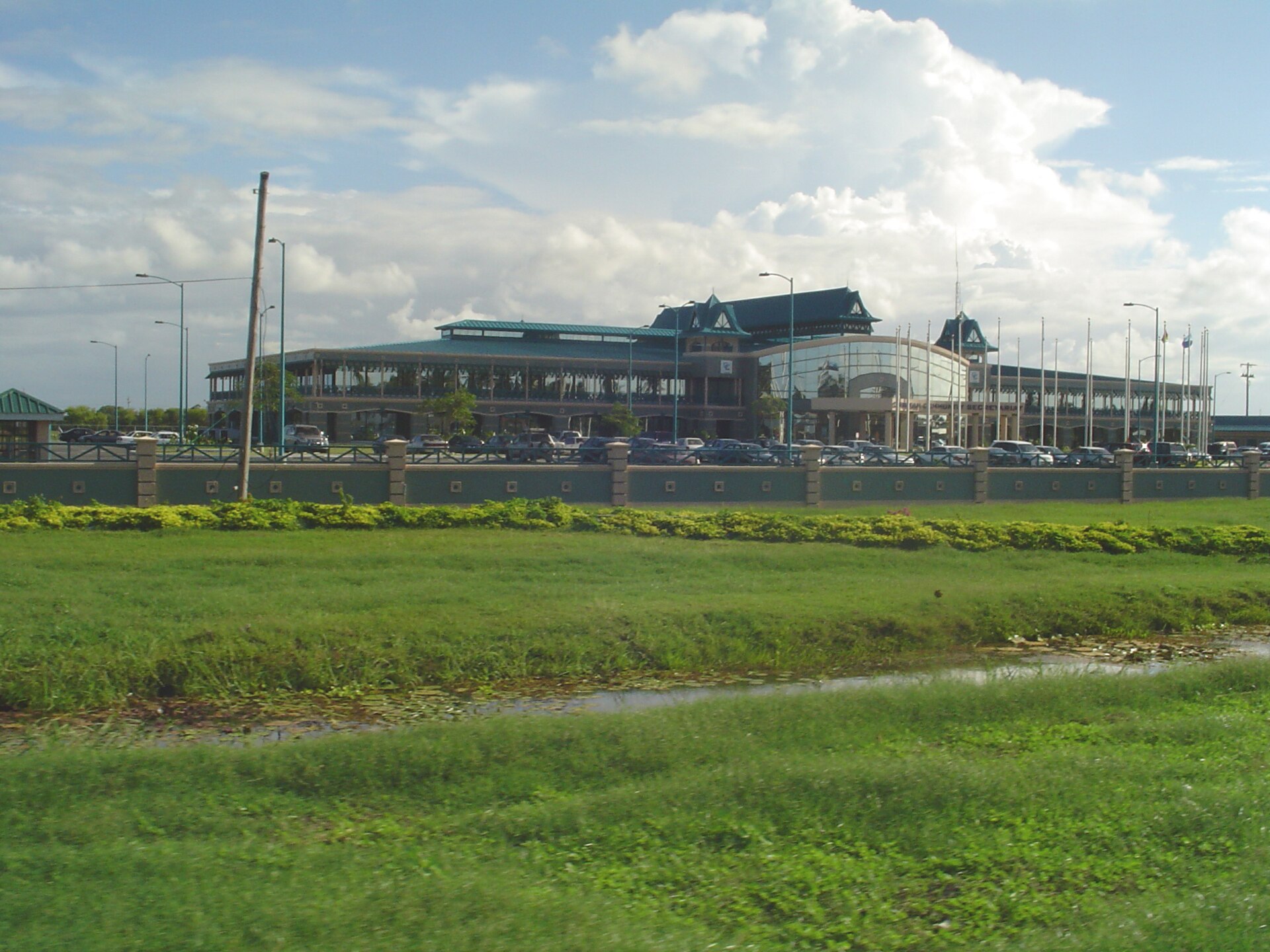
KINGSTON, Jamaica. Barbados Prime Minister Mia Mottley has called for an automatic funding mechanism for the Caribbean Community (CARICOM), proposing a 0.3 per cent levy on imports from outside the region to be paid straight from customs into a community account.
Speaking on Sunday at the Mona campus of the University of the West Indies, at the launch of a book on the future of regional integration, Mottley said CARICOM currently depends on annual assessed contributions from member governments that are voted through national budgets.
"The amounts are small, they are often paid late, and every payment, regrettably, is a fresh political decision. You cannot run an organisation on that basis," she said. She noted that leaders agreed at Rose Hall in 2003 to automatic resource transfers, but said that 23 years later the political will to carry this out had been lacking.
Levies on imports and visitors
Mottley said the import levy could be supplemented by a travel levy of no more than US$1 for each cruise passenger and US$2 for each long-stay visitor, while acknowledging that any change to cruise passenger duties would need negotiation with cruise lines and a long lead time.
She estimated that the 0.3 per cent levy, at current volumes of extra-regional imports, would raise between US$60 million and US$86 million a year, against regional institutions' needs of US$80 million to US$90 million annually. The travel levy could raise as much as another US$30 million, she said. She argued that the import levy, equivalent to three dollars on every 1,000 dollars of goods, would not add to the cost of living.
Barbados is also committed to providing CARICOM institutions with 25 megawatts of renewable energy licences, which could be monetised to provide independent revenue for regional bodies including the University of the West Indies, she said.
"The problem, my friends, is not the amount. It is the mechanism. It is the governance."
Mottley recommended a protocol to the treaty making the levy community revenue, with automatic remittance through central banks, a collection fee for customs, independent audits and sanctions for non-compliance. She said she was putting the ideas forward to start a debate among heads of government, not as the only way.
Three threats
She said CARICOM faces three existential threats that require coordinated action: the weakening of the international rules-based order, climate change and biodiversity loss, and the rise of artificial intelligence. She cited the role of the Caribbean Public Health Agency during the Covid-19 pandemic and of the regional disaster agency after Hurricane Melissa struck Jamaica as evidence that regional institutions deliver where individual states lack capacity.
A voice at the UN
Mottley also called for a stronger international role for the CARICOM secretary general, noting that CARICOM has only observer status at the United Nations while the European Union gained enhanced participation rights through a General Assembly resolution in May 2011. She said CARICOM had helped keep that door open for other regional blocs, "but 15 years later we have not walked through it".
She said obstacles include dualist legal systems, constitutional limits and the requirement under the Revised Treaty of Chaguaramas for treaty amendments to be agreed unanimously and ratified by all parties.
The book, "Caribbean Integration: The Patterson Doctrine", is co-authored by former Jamaica governor general Professor Sir Kenneth Hall and Myrtle Chuck-A-Sang, and examines the vision for integration associated with former Jamaica prime minister PJ Patterson.
 Brantley urges five-year CBI transition as federal government keeps its own timetable under wraps
 Skerrit promises community programme to improve access to MPs as Dominica heads to the polls
 Venezuela restates it will not recognise World Court role in Essequibo dispute with Guyana
 US embassy says Washington still backs 1899 award after reports an official floated Essequibo concession