
Destiny Deal Agreed: What Nevis Gets and What It Gives Up
Premier Mark Brantley says talks on the Destiny Special Sustainability Zone have concluded. The draft agreements, released for public comment ahead of Monday's first reading, show for the first time what Nevis would give and what it would get.
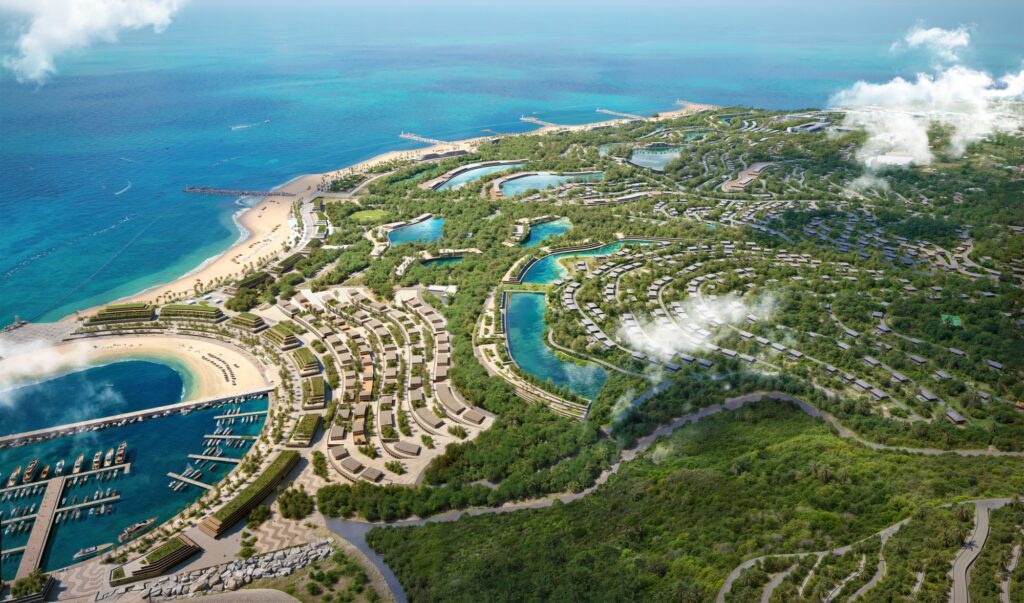
CHARLESTOWN, Nevis. Negotiations between the Nevis Island Administration, the Federal Government and the developers of the proposed Destiny Special Sustainability Zone have concluded, Premier Mark Brantley announced on Thursday, giving the public its first sight of terms that opposition politicians and civil society groups have spent months demanding to see.
No agreement has been signed. The draft texts were published on 26 November on a dedicated website, destinyssz.com, alongside plain-language summaries. The Nevis Island Assembly is due to give the enabling legislation its first reading on Monday 30 November and will then adjourn so that residents can review the documents and send feedback before the second and third readings. No date has been set for those readings, and the agreement must also be approved by the National Assembly before it can take effect.
"The negotiations concerning the proposed Destiny Project have now concluded," Mr Brantley said.
What is proposed
The main Development Agreement is between the Federal Government, the Nevis Island Administration (NIA) and two companies, Destiny International Limited of the Isle of Man and South Nevis Limited of Nevis, the vehicles of investor Olivier Janssens. It would create a zone on the south coast of Nevis between Long Point and Indian Castle. The published summary says the mapped area is a possible maximum, that the zone would start as a much smaller parcel, and that land sales must be voluntary. Destiny would also lease an area of Crown seabed for a marina and reef regeneration.
If both assemblies approve it, the zone would begin on 5 May 2027 or when the Premier publishes the Zone Order in the Gazette, whichever is later.
The US$1.2bn question
Mr Brantley has described Destiny as bringing some US$1.2bn of investment over time. The commitment set out in the agreement summary is narrower. Destiny must begin construction within six months and reach US$250m of capital investment within 66 months, in US$50m steps. The NIA can audit progress, and damages are payable if Destiny fails to make reasonable efforts to meet those milestones.
What Nevis would receive
A separate NIA Destiny Agreement sets out the payments. Destiny would pay US$50m for NIA priority projects by the end of 2031: US$5m when the zone starts, US$5m six months later, then US$10m a year. The first US$10m is earmarked for expanding Alexandra Hospital.
It would also pay US$10,000 for every new home sold in the zone, 10 per cent of zone-related net profits to the NIA and a further 10 per cent to a new Nevis Island Development Fund. Once approvals are in place, another 5 per cent of net profits would be paid directly to Nevisians through a technology platform. There is a US$1m-a-year scholarship scheme, with recipients required to return and work in Nevis for at least five years, and Destiny would fund half the cost of expanding Long Point Port, up to US$12m.
The headline sums come with conditions. The NIA summary states that Destiny may count the US$50m in priority-project payments against what it later owes on home sales and on the NIA's 10 per cent profit share. If the agreement is terminated because Destiny fails, its liability is capped at US$75m, secured by a lien over its land in the zone.
What the Federation would give up
The zone, Destiny and the people and businesses inside it would be exempt from all government taxes and charges, as would goods passing through the Federation on their way there. The governments would grant ten years' exclusivity, meaning no similar zone could be created elsewhere in St Kitts and Nevis, and would undertake not to change the law in ways that materially harm the zone while the agreement lasts. The NIA would exempt Destiny from the Aliens Land Holding Regulation Act, and NIA land inside the zone would be swapped for replacement land elsewhere on Nevis at least 20 per cent larger.
Inside the zone, a "Code of Destiny" would govern civil matters and criminal procedure, although any change would need ratification by both assemblies. Destiny would run its own internal security at its own cost, with a police officer of inspector rank or above stationed in the zone. No conventional banks holding ordinary currency accounts would be licensed there.
The agreement states that the Constitution, foreign affairs, defence, citizenship, elections, immigration and customs remain under national control, that national criminal law applies in full, and that only Eastern Caribbean Supreme Court judges may sit in the zone. Saddle Hill Fort would stay in NIA ownership and be open to the public.
What happens next
The full Development Agreement runs to 222 pages with schedules, and the summaries state that the signed texts, not the summaries, would prevail. Mr Brantley thanked Prime Minister Dr Terrance Drew, the federal Cabinet and the oversight committee the Prime Minister appointed, and said every submission sent to feedback@destinyssz.com would be considered before the second and third readings. How long the public will have to read and respond before those readings has not been announced.
 Dominica elections chief rejects voter register concerns as opposition cites 1,006 stalled applications
 Citizenship by investment to end on 1 January 2030, short of the five years Brantley demanded
 US calls Caribbean its neighbourhood as senior envoy pledges help for Jamaica against transnational gangs
 Brantley rules out new Nevis taxes for 2027 but residents will not get full fuel surcharge waiver